
Some footballers are remembered for what they won. Ronaldinho is remembered for how he made the game feel. The smile, the disguise on a pass, the sudden change of direction: watching him meant waiting for something you had never seen before, then wondering how anyone had imagined it in the first place.
Having witnessed the Brazilian at the top of his game at the Camp Nou, he brought real joy to those in the stands and to viewers around the world watching on television.
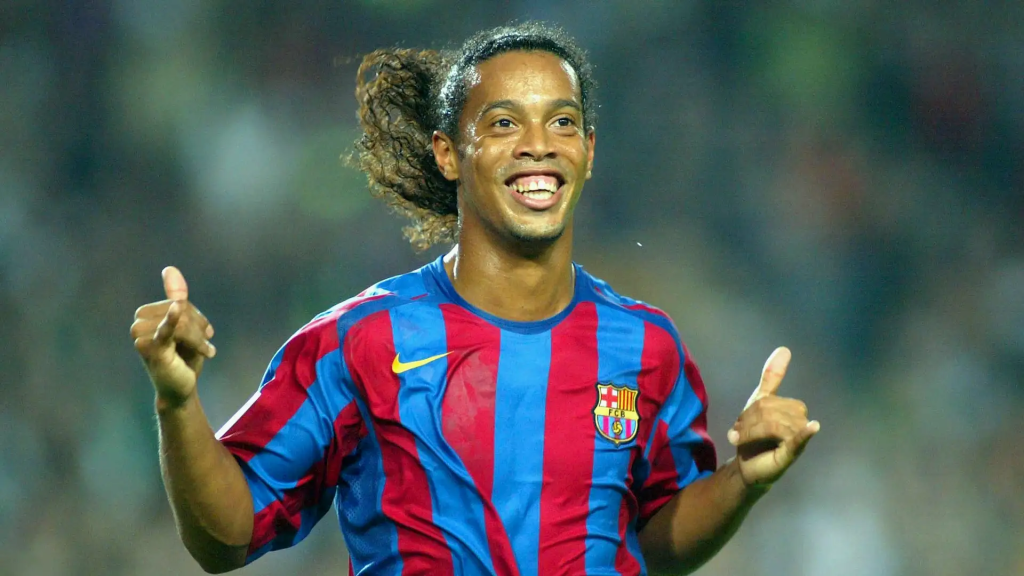
Behind the apparent freedom stood a footballer capable of deciding the biggest matches. A World Cup, a Ballon d’Or and a Champions League title gave the spectacle substance, but silverware alone cannot explain his enduring appeal. His finest football invited imitation, sending children onto playgrounds to attempt tricks that professionals struggled to anticipate.
His career also prompts questions about longevity, fulfilment and how greatness should be measured. Yet, as Ronaldinho steps back into the spotlight, the fascination remains wonderfully familiar: the possibility that, with a ball at his feet, he might still give us something to remember, again.
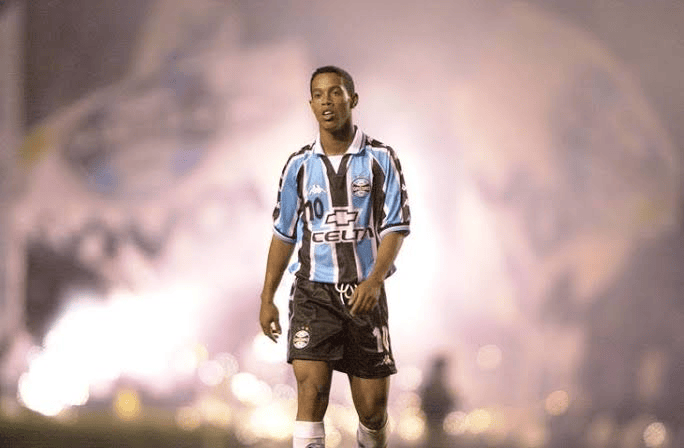
Before Europe knew his name, Ronaldinho was making defenders uncomfortable in Porto Alegre. Emerging through Grêmio’s academy, he reached the senior side in 1998, bringing an audacity that would become his signature. He had already helped Brazil win the Under-17 World Cup in 1997, offering an early glimpse of his extraordinary promise. By 1999, that promise was becoming substance: a state championship with Grêmio, a senior international debut and a Copa América triumph. His dazzling goal against Venezuela announced him to a wider audience. When Paris Saint-Germain came calling in 2001, Brazil’s latest entertainer was ready for a bigger stage.
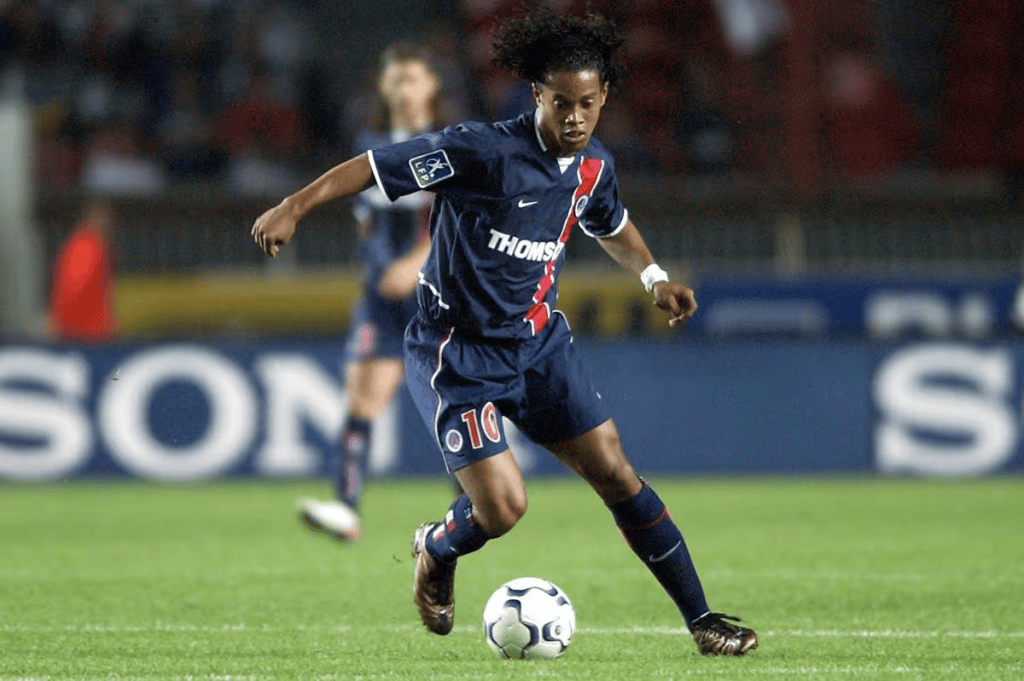
Paris gave Ronaldinho his first European stage, and he filled it with moments that demanded attention. Across two seasons, he scored 25 goals in 77 appearances, offering supporters a glimpse of the player who would soon conquer the world. His performances against Marseille produced particular affection, including two goals in a commanding home victory and another dazzling display at the Vélodrome. Consistency remained elusive, but the imagination was unmistakable: disguised passes, outrageous close control and the confidence to attempt the improbable. By his departure for Barcelona in 2003, Ronaldinho had established that his talent belonged among European football’s greatest attractions.
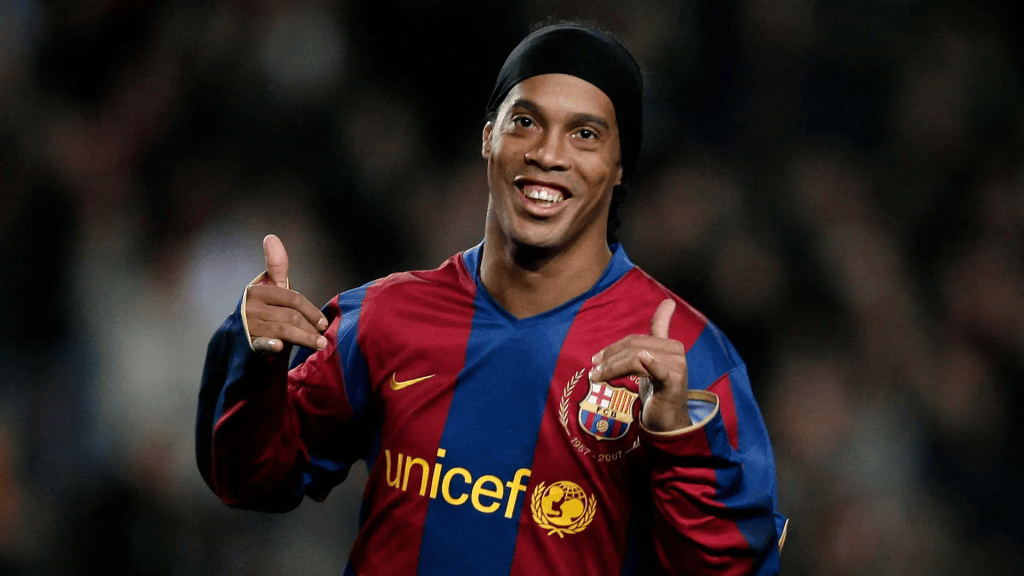
Ronaldinho arrived at Barcelona in 2003 with a brief that stretched beyond entertainment: restore belief to a club without a major trophy since 1999. Under Frank Rijkaard, he became the inspiration for its revival, helping deliver consecutive La Liga titles in 2005 and 2006, two Spanish Super Cups and the 2006 Champions League. Individually, FIFA World Player of the Year awards in 2004 and 2005 accompanied the 2005 Ballon d’Or, recognition of a footballer operating at the sport’s summit. Even Real Madrid supporters applauded his brilliance at the Bernabéu in November 2005. Yet the decline came quickly. Injuries, declining fitness, and questions about his commitment overshadowed his final seasons as Barcelona lost its supremacy. By 2008, the club was preparing for Pep Guardiola’s arrival and a new era. Ronaldinho departed for AC Milan, having restored Barcelona’s standing, though his reign ended sooner than his extraordinary talent had promised.
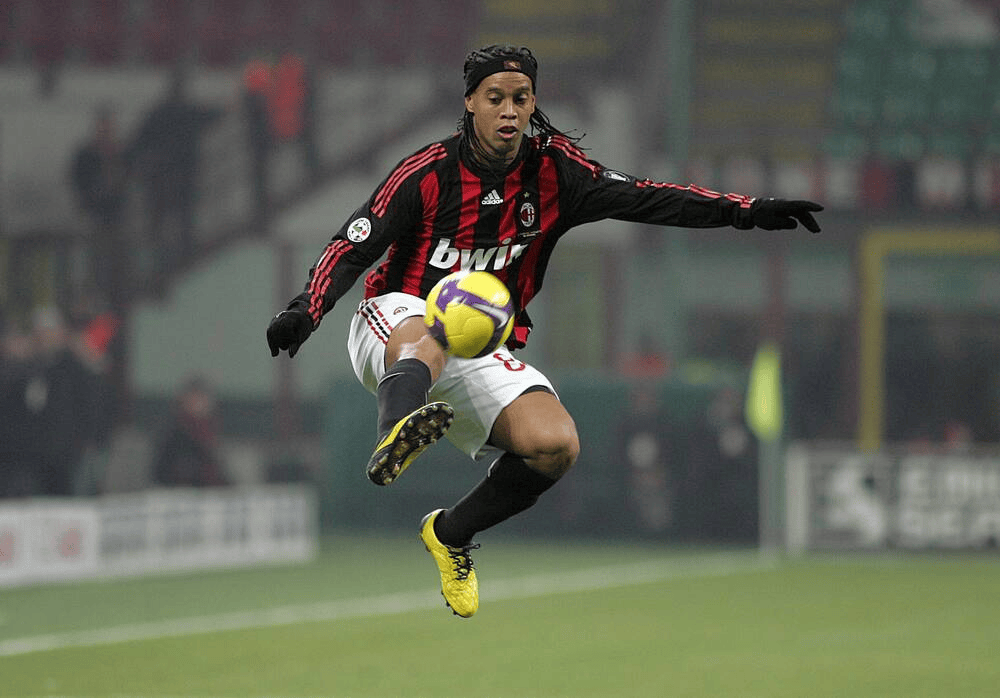
Leaving Barcelona did not extinguish Ronaldinho’s brilliance, although its appearances became less predictable. AC Milan offered flashes of the old invention before he returned to Brazil with Flamengo in 2011. His most impressive return came at Atlético Mineiro, where he helped deliver the club’s first Copa Libertadores title in 2013, adding South America’s greatest club prize to his European honours. Spells with Mexico’s Querétaro and then Fluminense followed, but neither restored his former stature. His departure from Fluminense in 2015 appeared to close the playing chapter. Formal retirement arrived in 2018, leaving a legacy far greater than those quieter years.
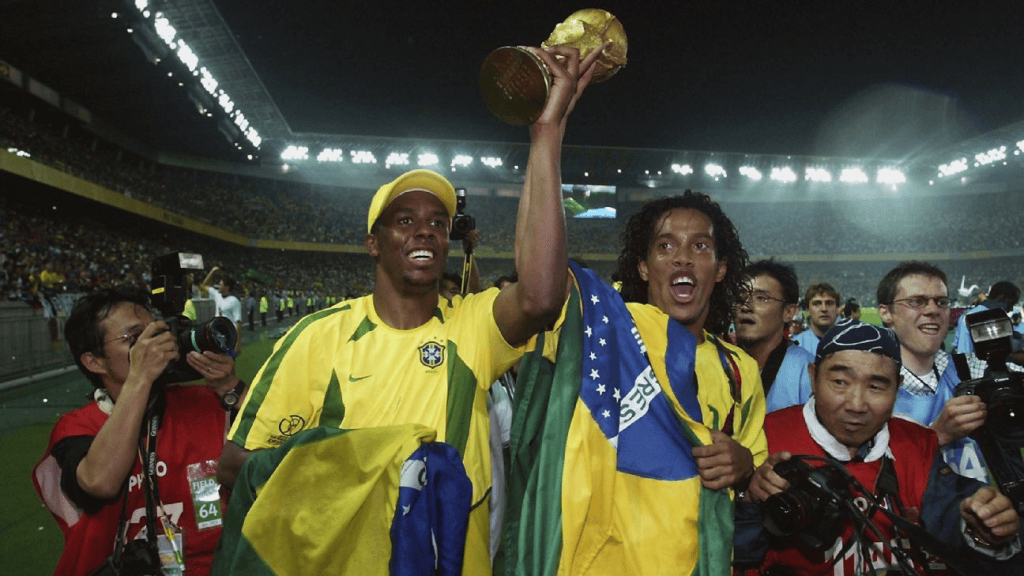
For Brazil, Ronaldinho carried the expectations of a nation that measures greatness in World Cups. Across 97 appearances, he scored 33 goals, winning the Copa América in 1999 before helping secure a fifth World Cup in 2002. Alongside Ronaldo and Rivaldo, he formed a devastating attacking trio, his audacious free-kick against England becoming an enduring tournament image. He captained Brazil to Confederations Cup glory in 2005, but the anticipated coronation at Germany 2006 unravelled against France in the quarter-finals. Olympic bronze followed in 2008. His international story mixed unforgettable achievement with the lingering sense that more might still have followed.
Ronaldinho’s departure from Fluminense in September 2015 brought his competitive career to a quiet halt. He formally retired in January 2018, seemingly confirming that the remaining glimpses of his genius would come through exhibitions, charity matches, and familiar footage. Yet football had one more unexpected chapter waiting.
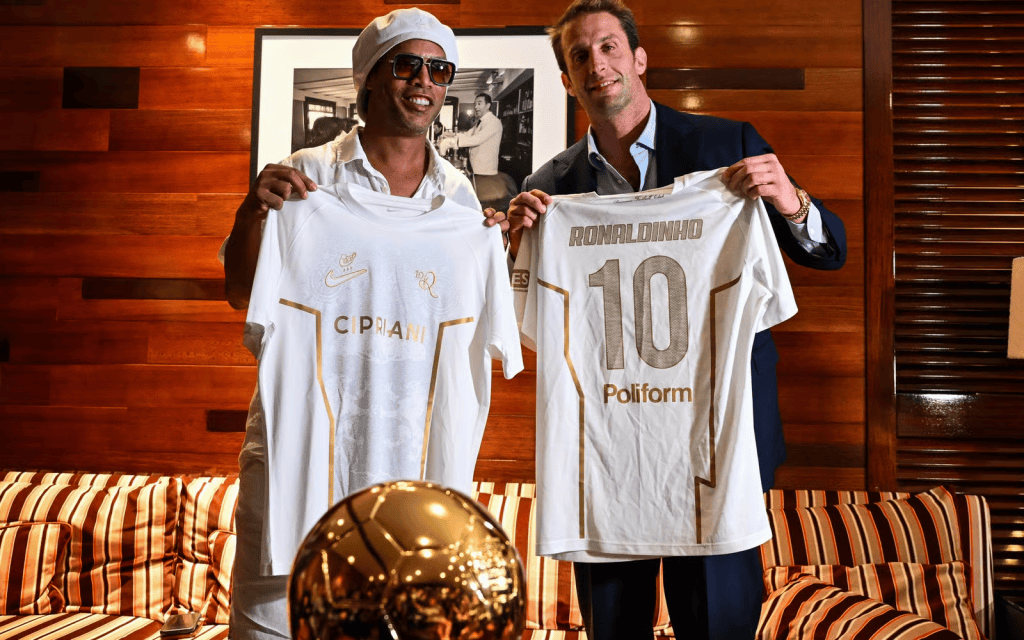
On Sunday, 15 November, the Brazilian returned aged 46, starting for Ravenna against Forlì in Italy’s Serie C, eleven years after his previous competitive appearance. Wearing his famous number ten, he played the opening 45 minutes of a 2–0 victory and contributed to the move that produced Giulio Donati’s opener.
This was a different Ronaldinho, operating without the acceleration that once terrified defenders, but still capable of drawing a crowd with a touch. His involvement also extends beyond the pitch as a shareholder. Whether this becomes more than one appearance remains uncertain; for an afternoon, however, a familiar smile belonged to competitive football again.
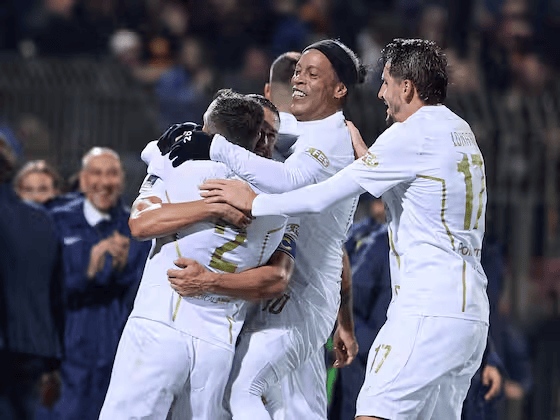
Ronaldinho offered glimpses of his enduring touch during Ravenna’s 2–0 victory over Forlì. FotMob awarded him 6.5 after 45 minutes, recording 28 touches, 17 completed passes at 81% accuracy and one chance created. He contributed to the opening goal, with his signature close control and pass into Vinicius, who provided the assist for Simone Rabbi to fire home.
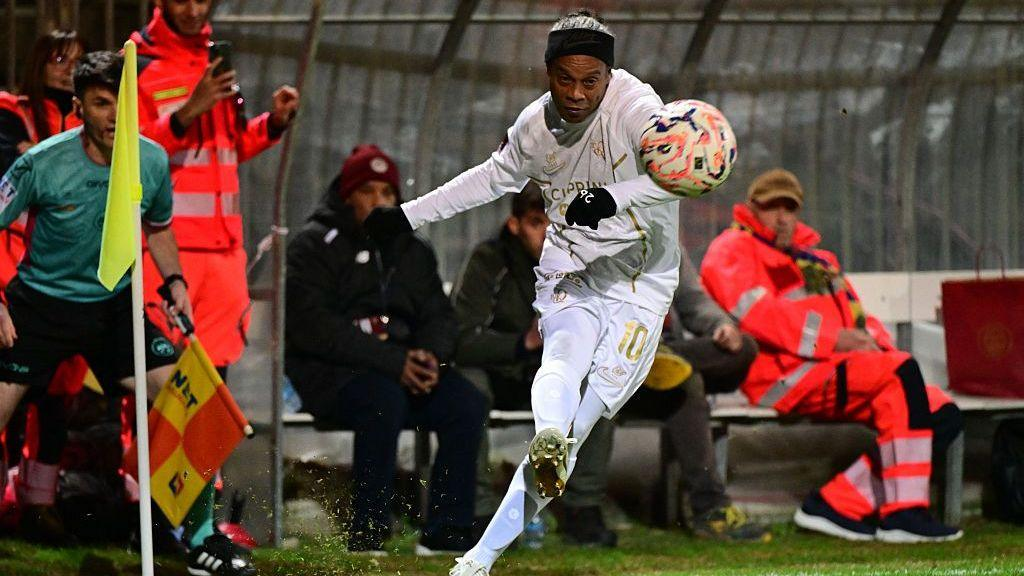
And perhaps this was not the final appearance after all. Reflecting on his afternoon, Ronaldinho told Sky Sport Italia: “It went by too fast, that has always been football for me.”
Then came the invitation that will leave Ravenna supporters hoping for another glimpse: “Now if the President calls me, I’ll be back.”
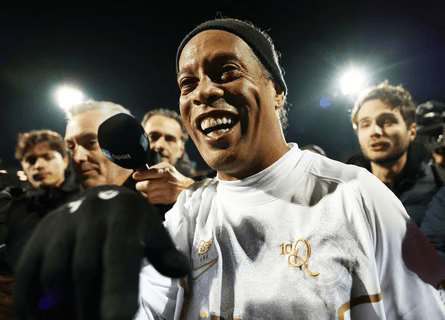
Another appearance remains a possibility, not a promise. But after eleven years away from competitive football, Ronaldinho has given the game another reason to watch and wait. A career that once seemed complete may yet have another afternoon left in it.
It’ll put another big smile on my face to see the famous R10 lace them up one time.


Leave a Reply