
Few institutions in world sport have shaped a club’s identity as profoundly as La Masia has FC Barcelona. It’s simply more than a youth academy; it’s become the heart of the club, producing generations of footballers who not only defined Barcelona’s success but also transformed modern football.
From Pep Guardiola to Lionel Messi, Xavi Hernández to Andrés Iniesta, and now Lamine Yamal and Pau Cubarsí, La Masia has consistently produced players capable of competing at the highest level. Its influence stretches far beyond Catalonia, helping shape World Cup-winning Spain teams, Champions League-winning Barcelona sides and some of the greatest players the game has ever seen.
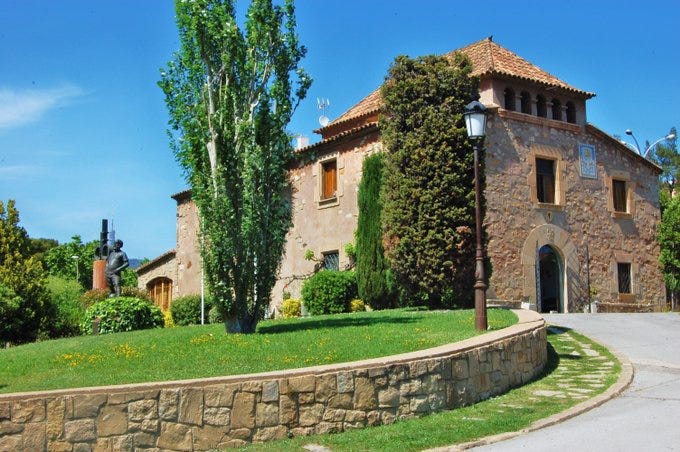
From Farmhouse to Football Institution, the story begins not on a football pitch, but inside a centuries-old farmhouse. The building known as La Masia de Can Planes was constructed in 1702 and became part of Barcelona’s property during the development of Camp Nou in the 1950s. For decades, it served a variety of functions before being transformed in 1979 into a residence for young footballers under club president Josep Lluís Núñez.
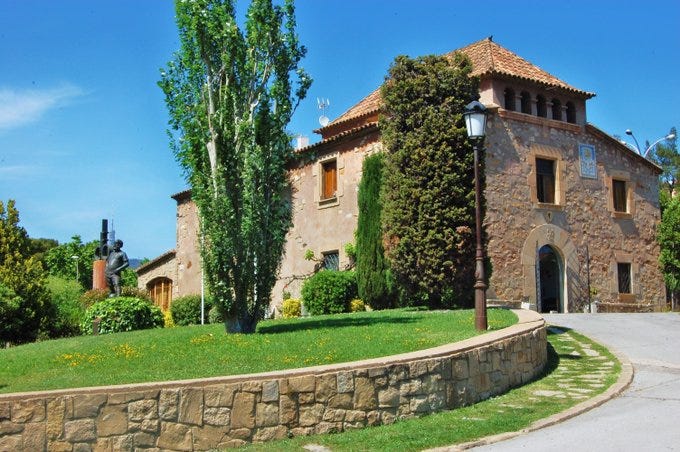
The move revolutionised Barcelona’s approach to youth development. Talented youngsters from across Spain and beyond could now live, study and train within the same environment, immersing themselves in the values and culture of the club from an early age. They lived by the motto “ Mes Que Un Club “
The foundations of Barcelona’s modern youth philosophy had already begun to take shape under influential coaches such as Laureano Ruiz, who championed technical football and possession-based principles during the 1970s. However, the academy’s defining transformation arrived with Johan Cruyff.
When Cruyff became first-team manager in 1988, he introduced a revolutionary vision that would change Barcelona forever. Inspired by Dutch Total Football, he ensured every team throughout the academy played the same style as the first team. For the first time, Barcelona possessed a footballing identity that stretched from its youngest age groups all the way to Camp Nou and was the catalyst for the famed “Dream Team”
Former academy coaches have often spoken about a clear distinction in the club’s history: there was a Barcelona before Cruyff, and a Barcelona after Cruyff. More Than a Football Academy.
One of the reasons La Masia became so influential was that it was never designed simply to produce footballers. Young players lived together, attended school together and developed together. Club staff acted not only as coaches but also as mentors. The objective was to develop responsible young people as well as elite athletes capable of winning the Champions League or, in some cases, the World Cup.
Former graduates describe La Masia as a family environment where discipline, humility and education were considered every bit as important as technical ability. Days were structured around academic studies, communal meals, training sessions and personal development. This environment helped create bonds that would later become visible on the pitch. Xavi, Iniesta, Busquets and Messi were not merely tactical; it was forged through years of growing up within the same footballing culture that became second nature on the biggest stages in world football.
The La Masia Philosophy, unlike many academies that prioritise physical attributes, La Masia places intelligence at the centre of player development, with young footballers being taught positional play, spatial awareness, ball retention, pressing, technical ability, and decision-making from the earliest age groups. Coaches often value a player’s understanding of the game more highly than physical dominance, unlike what you might see in most English academies.
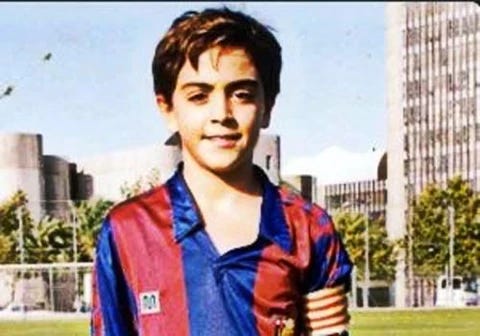
This philosophy allowed players who may have been overlooked elsewhere to flourish. Xavi, Iniesta and Messi were not physically imposing youngsters, yet Barcelona recognised qualities that could not be measured by size; they excelled with the ball at their feet, and thus were perfect for La Masia.
Players arriving in the first team already understand Barcelona’s tactical language because they have spent years learning the same principles, unlike most football clubs, where the tactical play is set out by the head coach. At Barca, the head coach is expected to play “The Barca Way” which in turn is “The La Masia Way” or some very close resemblance.
No academy in football history has produced a generation quite like La Masia’s class of the late 1990s and early 2000s. Lionel Messi arrived from Argentina in 2000 as a 13-year-old and developed into arguably the greatest footballer of all time. Alongside him emerged Xavi Hernández and Andrés Iniesta, two midfielders whose intelligence and technical brilliance would redefine the position.
Together with Sergio Busquets, they formed the core of one of football’s greatest teams. Around them stood fellow academy graduates, including Carles Puyol, Gerard Piqué, Víctor Valdés and Pedro Rodríguez.
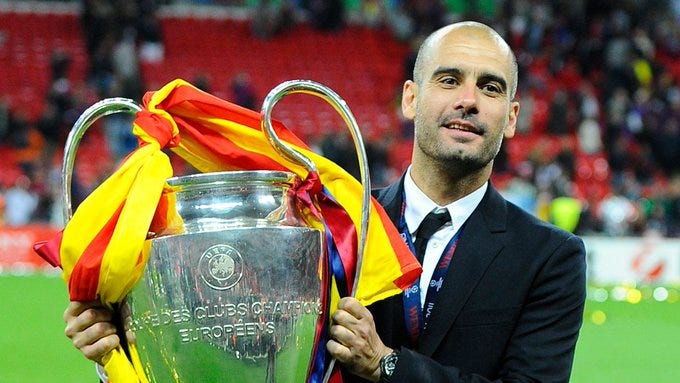
The culmination of La Masia’s work arrived under Pep Guardiola, himself a former La Masia graduate, having previously turned down the club’s advances before finally accepting and managing to settle in the famous farmhouse. Between 2008 and 2012, Barcelona won 14 major trophies, including three La Liga titles and two UEFA Champions League crowns. Many consider Guardiola’s Barcelona to be the greatest club side ever assembled. What made it unique was that so much of its success was built from within and is thanks to La Masia; no club has dominated the modern game quite like this side did, and they did it spending next to nothing on the players.
La Masia’s influence eventually extended beyond Barcelona and onto the international stage. When Spain won the 2010 FIFA World Cup, seven members of the squad had come through Barcelona’s academy. Xavi, Iniesta, Puyol, Piqué, Busquets, Pedro and Pepe Reina helped deliver the greatest achievement in Spanish football history.
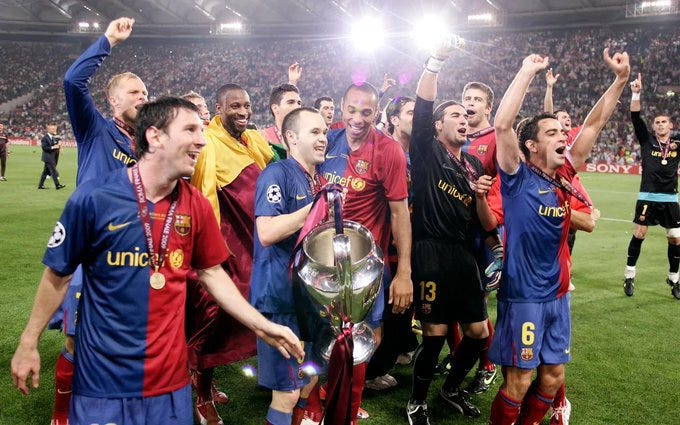
Spain’s possession-based approach reflected many of the principles developed at La Masia. When Andrés Iniesta scored the winning goal against the Netherlands in the World Cup final, it represented more than a personal triumph; it was a validation of an entire footballing philosophy built all those years ago by Johan Cruyff.
Later that same year, La Masia achieved another historic milestone. Messi, Xavi and Iniesta finished first, second and third in the Ballon d’Or voting, making it the first academy in football history to produce all three finalists for the sport’s most prestigious individual award. No academy has matched that achievement since.
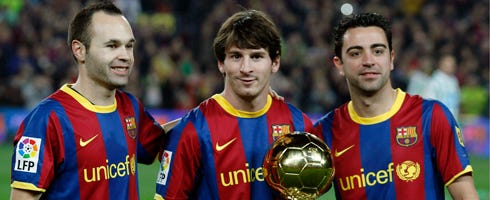
After the departures of Messi, Busquets, Piqué and Jordi Alba, many wondered whether La Masia’s greatest days were behind it. Instead, a new generation has emerged. Financial difficulties forced Barcelona to place renewed faith back in its youth system, after spending a few years spending huge sums on players that didn’t ultimately fit the Barca Way. Instead, they created opportunities for players such as Gavi, Alejandro Balde, Fermín López, Marc Bernal, Pau Cubarsí and Lamine Yamal to shine much like Messi, Xavi, Iniesta, etc. did before them.
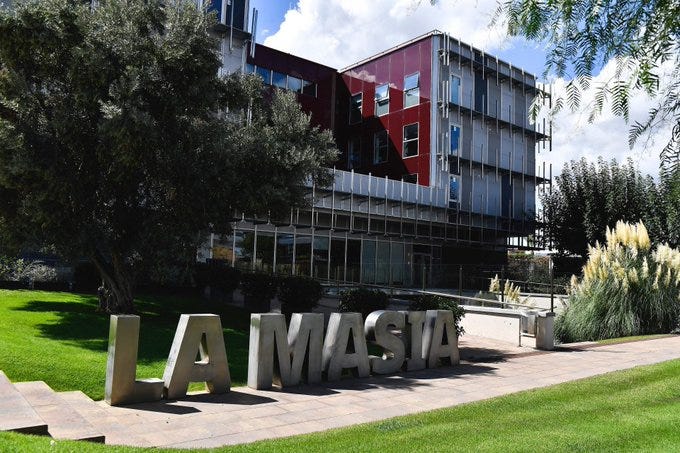
The academy’s move to the state-of-the-art Ciutat Esportiva Joan Gamper complex in 2011 ensured that its educational and developmental principles remained unrivalled within the game and provided world-class facilities for future generations. Today, Barcelona once again finds itself built around academy graduates, having won back-to-back La Liga trophies under German Hansi Flick.
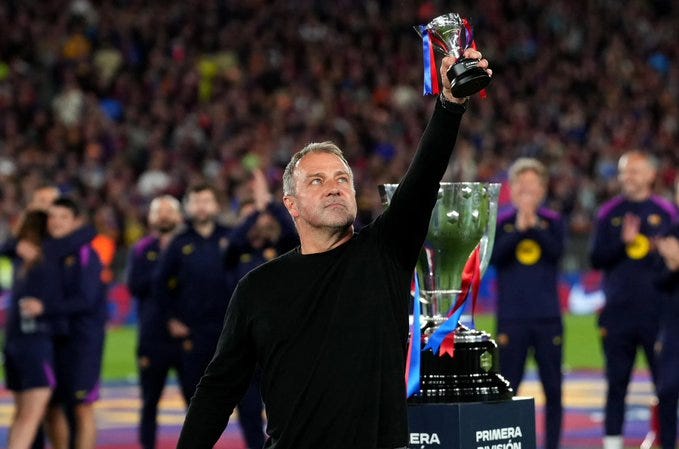
Much like the generations before them, many of these players have progressed through the system together, carrying forward the club’s footballing identity and The Soul of Barcelona.
La Masia’s success cannot be just measured by trophies and appearances. Its greatest achievement is the preservation of a footballing philosophy across multiple generations. While players, managers and eras change, the principles remain the same as they did all those years ago in a little Farm House sat ourside the Camp Nou,
The academy has produced World Cup winners, European champions, Ballon d’Or winners and some of the greatest footballers in history. More importantly, it has provided Barcelona with something many clubs spend decades searching for: a lasting identity.


Leave a Reply